
International BCI Strategies Conference 2026
Successfully Held in Qianhai Shenzhen
Global Visionaries and Clinical Leaders Convene to Bridge Frontier
Brain-Computer Interface Research with Clinical and Industrial Translations
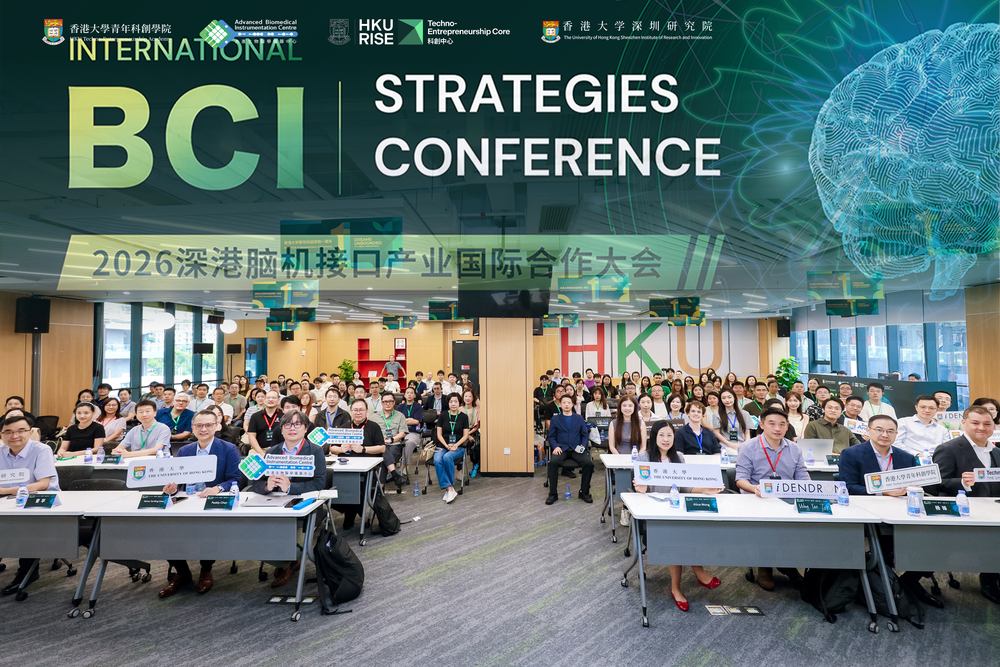
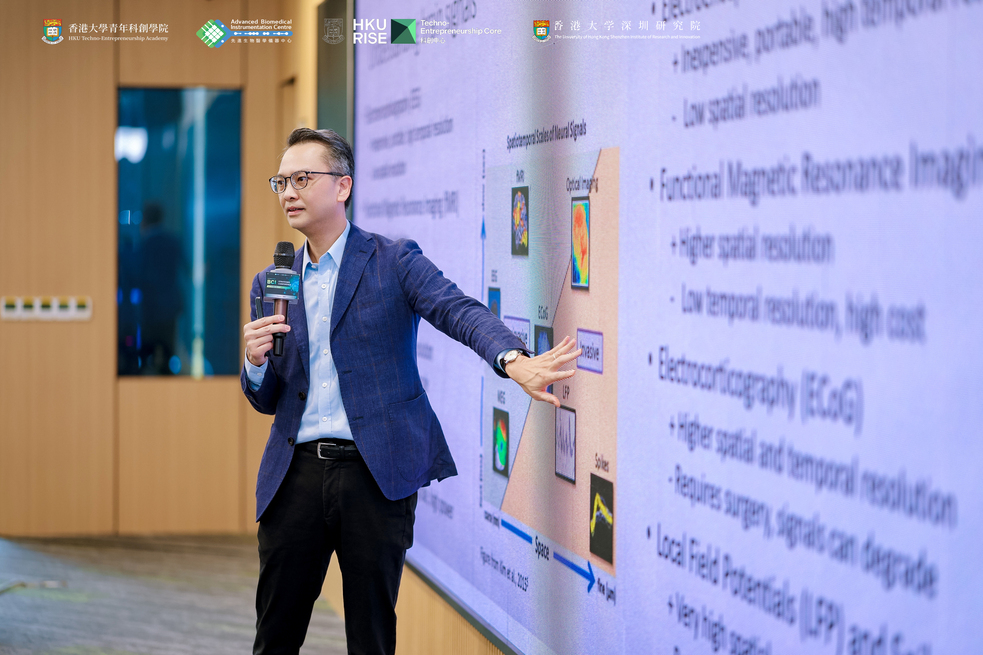
The International BCI Strategies Conference 2026, organized by InnoHK Advanced Biomedical Instrumentation Centre (ABIC) from the University of Hong Kong (HKU), HKU Techno-Entrepreneurship Academy (TEA), HKU Techno-Entrepreneurship Core (TEC) and HKU Shenzhen Institute of Research and Innovation (SIRI), was successfully held in Qianhai, Shenzhen, on 15 August 2026. The conference brought together principal investigators, clinicians, industry leaders, venture capital investors, and medical device and digital health representatives from Hong Kong, the Chinese Mainland, and overseas. Discussions spanned fundamental neuroscience, clinical applications, technology translation, capital incubation, medical device regulation, and international research collaboration, examining how Brain-Computer Interfaces (BCI) technologies can progress from frontier scientific discovery toward clinical practice and scalable real-world applications.
Bridging Diverse Perspectives, Unlocking New Possibilities
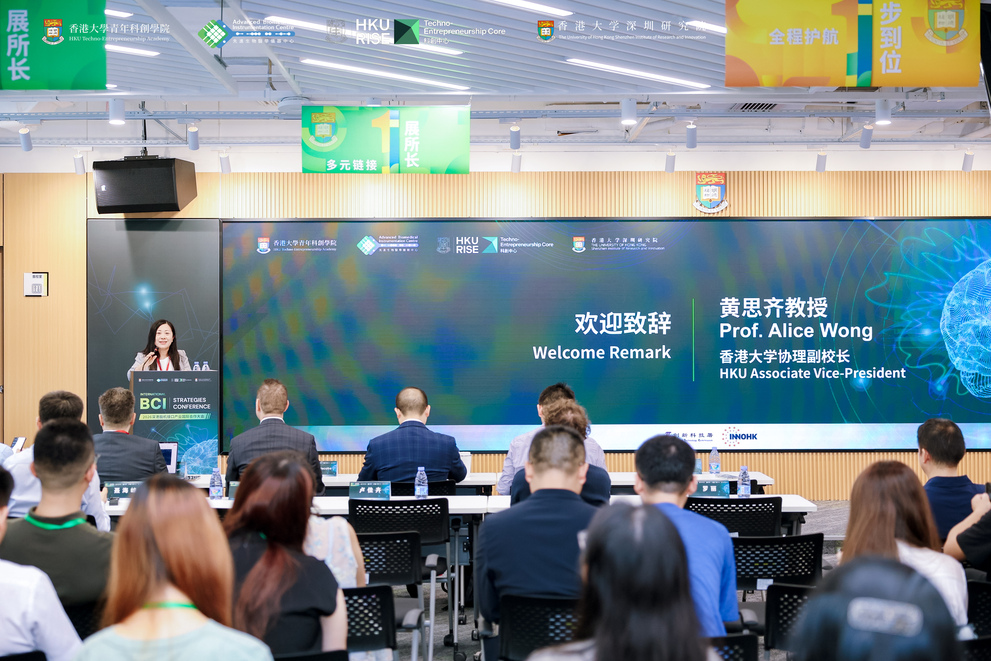
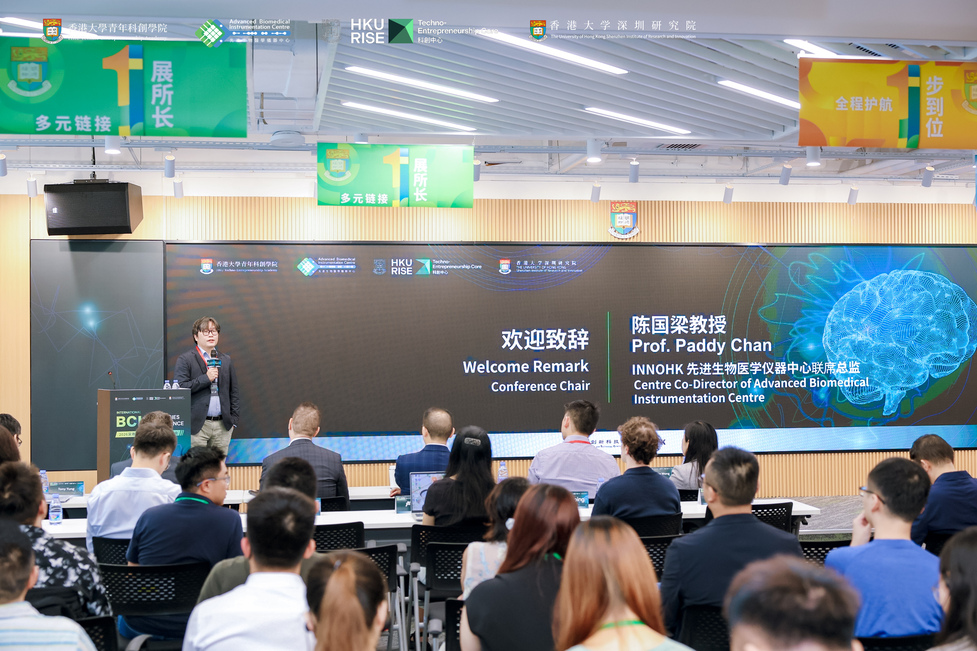
The conference commenced with welcoming remarks from Professor Alice Sze Tsai Wong, Associate Vice-President (Research) of HKU, on behalf of the University, alongside Professor Paddy Chan, Conference Chair and Centre Co-Director of ABIC. Both speakers emphasized the critical importance of advancing BCI technology through synergistic collaboration across disciplines, regions, and industries. Together, they offered complementary institutional perspectives spanning academic research, innovation ecosystems, and BCI industry infrastructure, successfully setting the stage for a day of global exchange and translational collaboration.
From Clinical Breakthroughs to Future Frontiers: The Clinician’s and Academic’s Perspectives
The morning sessions examined opportunities for neuroscientific advancement driven by clinical needs in BCIs. Professor Danny Tat Ming Chan, Clinical Associate Professor (Honorary) and Consultant Neurosurgeon in the Department of Surgery at Chinese University of Hong Kong, discussed the translational evolution of BCIs from early scientific exploration toward clinical application. He highlighted how unmet clinical needs in motor restoration and neuromodulation actively drive progress in neuroscience and technological innovation.
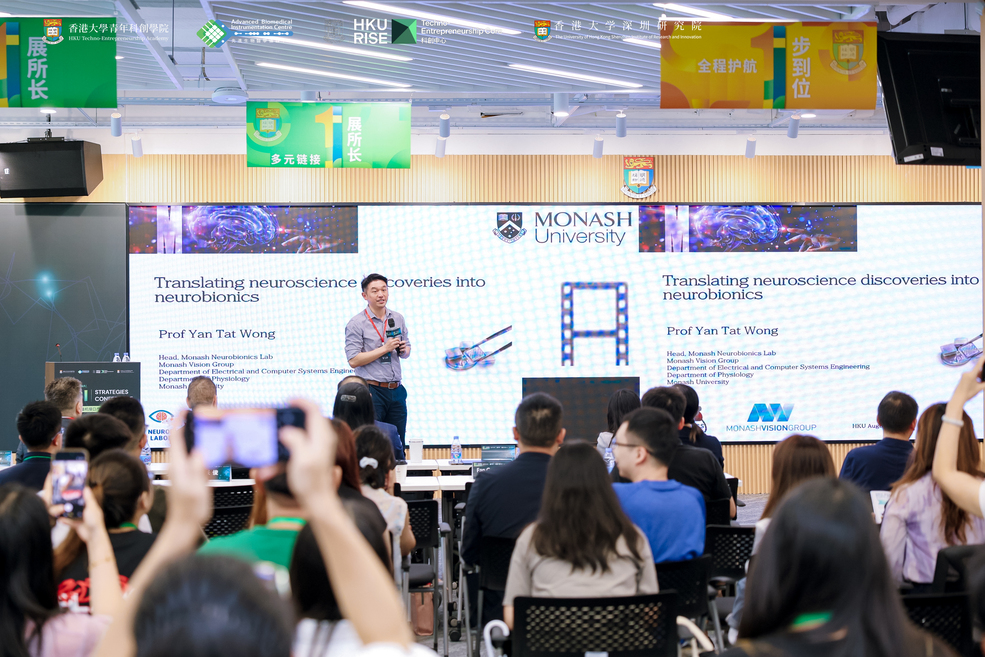
Professor Yan Tat Wong, Head of Department of Electrical and Computer Systems Engineering at Monash University, subsequently presented advanced developments in cortical prostheses and neural implants. Drawing on investigations in neural signal recording, electrical stimulation, implant design, computational modeling, and preclinical studies, he explored how a deeper understanding of cortical vision mechanisms could enable more precise neuromodulation to restore visual function.
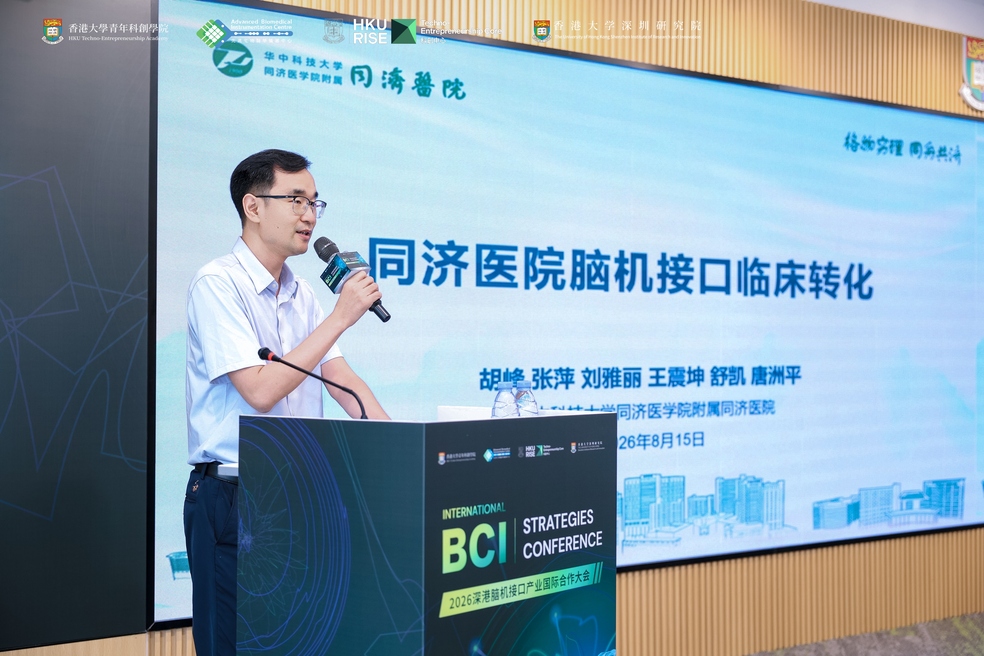
The clinical paradigm was further elaborated by Dr. Hu Feng, Associate Chief Physician of Neurosurgery and Director of BCI Research Ward at Tongji Hospital, Huazhong University of Science and Technology. He discussed emerging BCI applications in clinical diagnostics, neurological function assessment, and therapeutic intervention, highlighting the potential of BCI technologies to address critical clinical needs.
Roundtable Discussion: Aligning Networks Across Continents
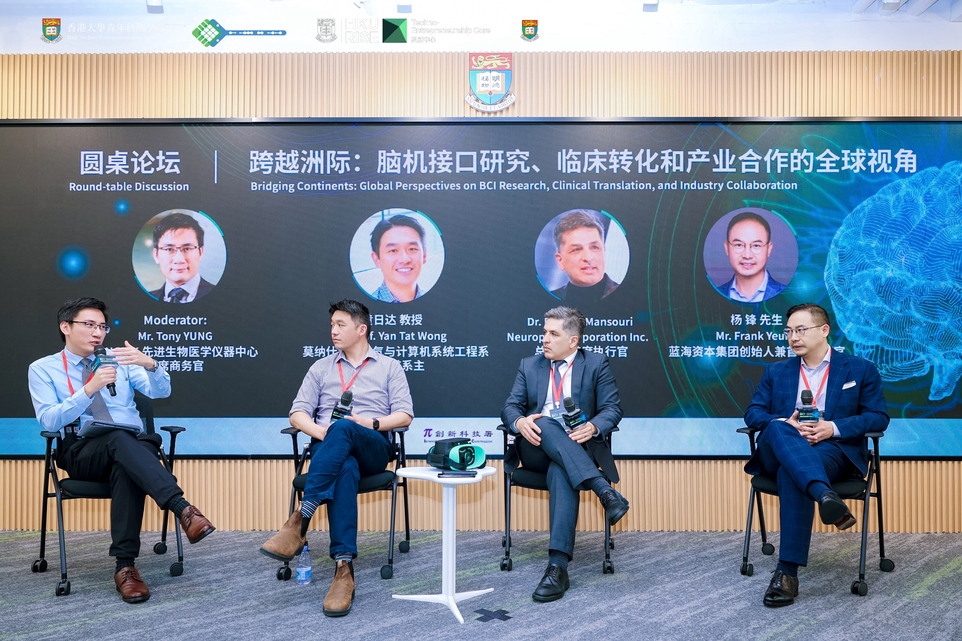
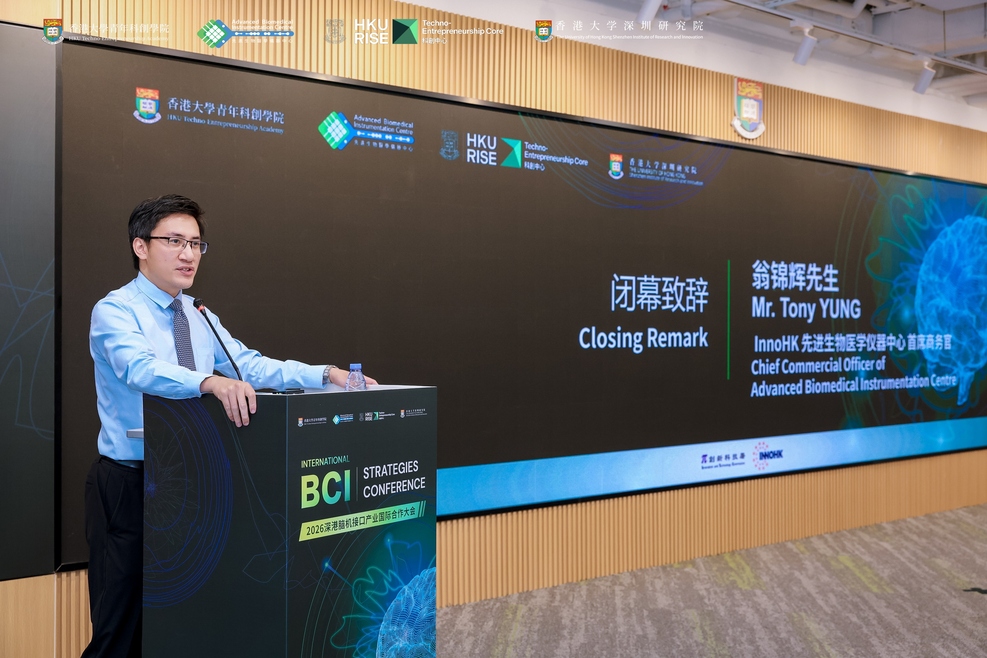
The afternoon roundtable discussion, themed “Bridging Continents: Global Perspectives on BCI Research, Clinical Translation, and Industry Collaboration”, was moderated by Mr. Tony Yung, Chief Commercial Officer of ABIC. Panelists Professor Yan Tat Wong, Dr. Behzad Mansouri, President and CEO of Neuroptek, and Mr. Frank Yang, Founding Partner and CEO of Blue Ocean Capital Group, explored how scientific discoveries secure sustained capital investment, how medical technologies overcome clinical translation barriers, and how laboratories, clinicians, industry stakeholders, and capital markets forge effective end-to-end collaboration chains. The discussion also examined the respective strengths of different global regions in academic research, regulatory frameworks, advanced manufacturing, resources and commercialization, analyzing how international collaboration can accelerate global BCI deployment.
Value Discovery and Ecosystem Building: The Industry and Investor’s Perspectives
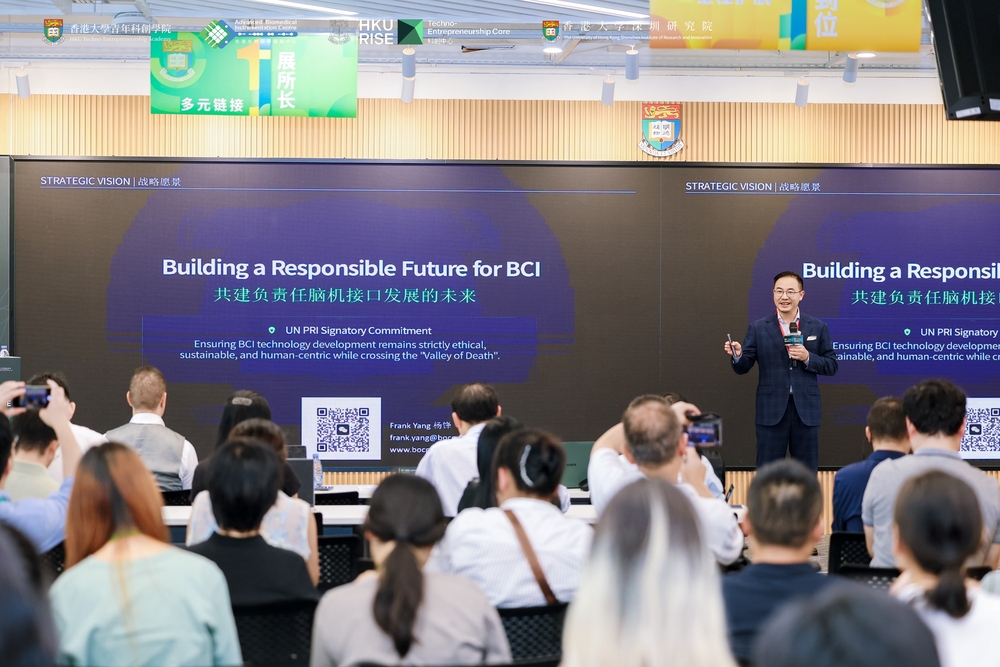
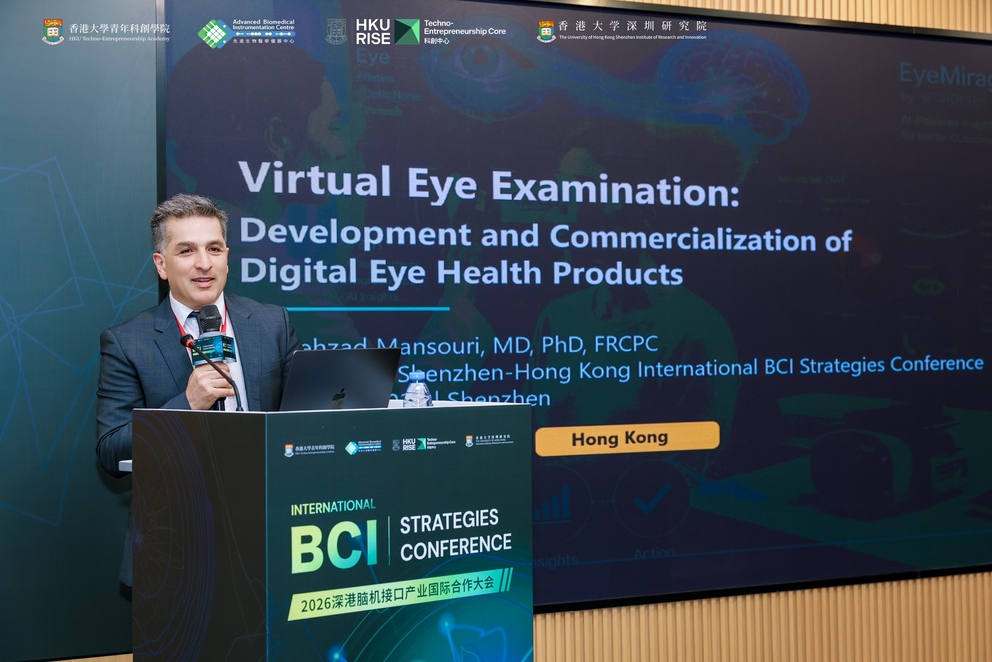
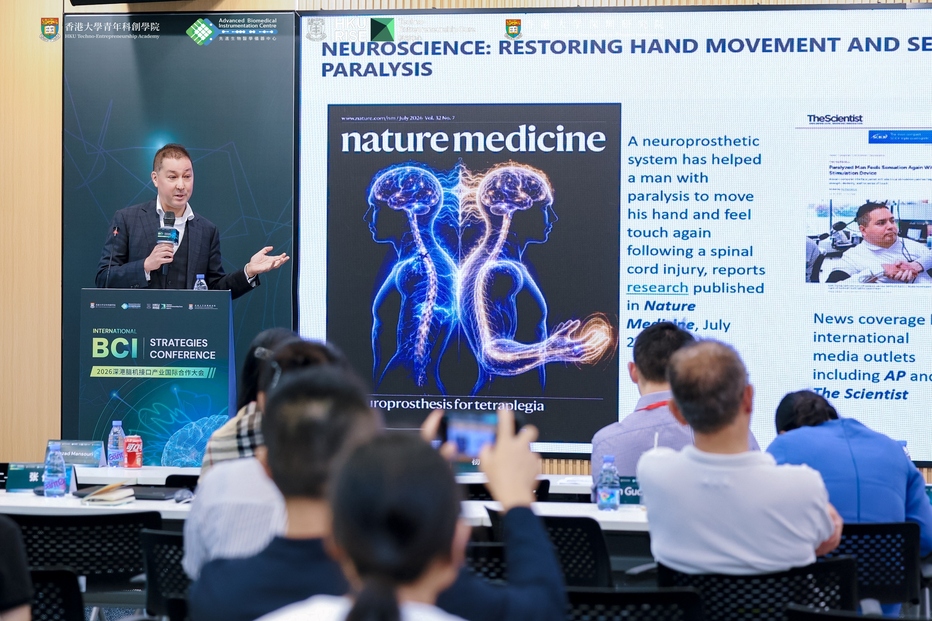
In the subsequent session, Mr. Frank Yang discussed the critical importance of neuro-chips, advanced biomaterials, and artificial intelligence in engineering the next-generation BCI ecosystem. Dr. Behzad Mansouri presented virtual eye examination technologies, demonstrating how AI-enabled and standardized visual-function assessments extend specialist ophthalmic care into portable, interconnected digital health settings. He further highlighted opportunities for successful value translation by aligning clinical validation, quality management systems, regulatory readiness, and strategic commercialization in a synergistic ecosystem.
Setting the New Floor and Rules of Global Innovation: The Regulator’s and Publisher’s Perspectives
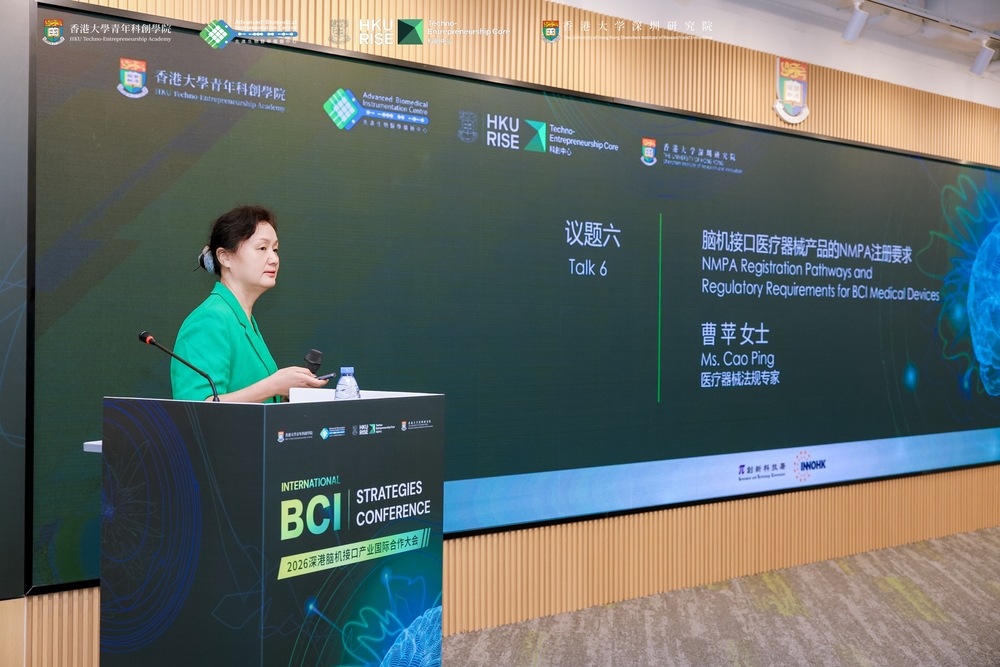
Regulatory pathways remain an essential bridge between technological innovation and clinical adoption. Ms. Cao Ping, a medical device regulatory expert, introduced the classification, approval, and registration pathways for innovative BCI medical devices, providing research teams and corporate entities with practical paradigms to navigate regulatory requirements as laboratory technologies progress toward clinical implementation. The conference concluded with a presentation by Mr. Arnout Jacobs, President of Springer Nature Greater China, who highlighted the critical role of scientific publishing in disseminating high-impact research and strengthening international research connectivity. Enhanced international visibility and academic research collaboration, he noted, can further catalyze technological innovation and industrial development.
Advancing Future of BCI Through Multi-Disciplinary Pipelines
From fundamental neuroscience and implant design to clinical needs and digital healthcare, and from regulatory frameworks and capital incubation to scientific publishing and international connections, the conference fostered interconnected pathways uniting scientific discovery, clinical validation, industrial translation, and global partnership. Participants from diverse geographic and professional backgrounds engaged in dynamic exchanges, recognizing that unlocking BCI’s full therapeutic and economic potential requires an integrated ecosystem of scientists, clinicians, engineers, corporate entities, investors, regulators, and international partners.
The conference further highlighted the complementary strengths of Hong Kong and Shenzhen across scientific research, clinical resources, advanced manufacturing, venture capital, and international connectivity. By forging continued open exchange, the twin cities are uniquely positioned to accelerate BCI translation from laboratory to clinic, ultimately enhancing global patient healthcare and quality of life.
About the InnoHK Advanced Biomedical Instrumentation Centre
The InnoHK Advanced Biomedical Instrumentation Centre (ABIC), one of the research laboratories established under the Hong Kong Government’s InnoHK program, was launched by The University of Hong Kong (HKU) in 2020. The Centre leads in the biomedical domain, leverages research in academia, and combines trans-disciplinary, trans-institutional, trans-regional, and trans-generational approaches to drive ground-breaking instrumentation advancements. The enhancements are pivotal in transforming the quality of patient care, enabling accurate diagnoses, and facilitating innovative medical research. ABIC contributes to societal impacts through the commercialization of innovations for multiple beneficiaries, including patients, clinicians, hospitals, industrial stakeholders, government, scientific communities, as well as the local healthcare ecosystem.
Acknowledgements
The ABIC Organizing Committee extends its sincere appreciation to HKU Techno-Entrepreneurship Academy (TEA), HKU Techno-Entrepreneurship Core (TEC), and HKU Shenzhen Institute of Research and Innovation (SIRI) for their support; and to the PIs, clinicians, industry leaders, investors and innovation representatives from Hong Kong, the Chinese Mainland and overseas for sharing invaluable expertise and insights.
Media Enquiries
The InnoHK Advanced Biomedical Instrumentation Centre (ABIC)
Ms Gloria Lam, Publicity Manager (Tel: +852 3910 3956 | Email: publicity@abic.hk)
深港脑机接口产业国际合作大会在深圳前海举行
汇聚全球科研、临床、产业与投资力量
共同探討脑机接口从实验室走向临床产业化
香港大学(港大)InnoHK先进生物医学仪器中心(ABIC)、香港大学青年科创学院、香港大学科创中心及香港大学深圳研究院主办的 “2026深港脑机接口产业国际合作大会” 于2026年8月15日在深圳前海圆满举行。大会汇聚来自香港、内地及海外的科研专家、临床医生、产业领袖、投资机构、医疗器械及数字健康企业代表,围绕脑机接口的基础科学、临床应用、产业转化、投资孵化、医疗器械监管及国际科研合作等关键议题展开交流,共同探讨脑机接口如何从前沿科学研究进一步走向临床实践和规模化应用。
汇聚多方力量 共启跨国合作机遇
大会开幕环节由香港大学协理副校长黄思齐教授、InnoHK先进生物医学仪器中心总监兼大会主席陈国梁教授分别代表港大及大会发表欢迎辞。兩位嘉宾从大学科研、区域创新发展及脑机接口产业建设等不同角度,为大会揭开序幕,共同强调多地区、多学科及多产业合作对于推动脑机接口发展的重要性。
医生与学者视角出发 探索科学突破与未来边界
大会上午的主题演讲首先聚焦从脑机接口临床需求到脑科学的发展机遇。香港中文大学外科学系名誉临床副教授、神经外科顾问医生陈达明教授,分享脑机接口从早期科学探索逐步迈向临床应用的发展历程,并围绕运动功能恢复及神经调控等方向,探讨临床需求如何推动脑科学研究及技术创新。
随后,澳大利亚蒙纳士大学电气与计算机系统工程系黄日达教授介绍了皮层视觉假体及神经植入技术的研究进展,并从神经信号记录、电刺激、植入器件设计、计算建模及临床前研究等层面,探讨如何进一步理解视觉皮层神经机制,并通过更精准的神经调控推动视觉功能重建。
在临床应用方面,华中科技大学同济医学院附属同济医院神经外科副主任医师、脑机界面研究型病房主任胡峰医生随后分享相关实践与发展方向,进一步讨论脑机接口在疾病诊断、神经功能评估及治疗干预方面的潜在价值。
跨越洲际 连接科研、临床与产业
下午的圆桌讨论以“跨越洲际:脑机接口研究、临床转化和产业合作的全球视角”为主题,由InnoHK先进生物医学仪器中心首席商务官翁锦辉先生主持。来自不同领域的嘉宾如黄日达教授、Neuroptek总裁兼首席执行官Behzad Mansouri博士及蓝海资本集团创始人兼首席执行官杨锋先生,围绕科研成果如何获得持续资金支持、医疗器械如何跨越临床转化障碍,以及实验室、临床、产业到资本市场如何建立更有效的完整合作链条展开深入讨论。嘉宾亦探讨不同地区在科研、监管、制造、资源及商业化方面的优势,以及如何通过国际合作加快脑机接口技术的全球发展。
投资与产业视角出发 从价值发现走向生态构建
随后下午的主题演讲中,杨锋先生发表围绕国产神经芯片、相关生物材料及人工智能等技术对于建立下一代脑机接口产业生态的重要性。Behzad Mansouri博士则展示了如何结合人工智能及标准化视觉功能测试,将专业眼科测量拓展至更便携、更互联的数字化医疗场景,并进一步讨论临床验证、质量体系、监管机构与商业化协同发展的机会。
监管与科研出版视角出发 推动国际创新规则
在产业落地过程中,监管体系同样是连接技术与临床的重要环节。医疗器械法规专家曹苹女士介绍脑机接口创新医疗器械的分类、审批、注册路径及相关监管要求,为科研团队及企业理解脑机接口医疗产品从研发走向临床应用的监管框架提供参考。大会最后由施普林格・自然集团大中华区总裁Arnout Jacobs先生作专题分享,指出来自中国的高质量科研成果的发表传播与交流,有助于连接不同国家和地区的科研力量,进一步推动技术创新及产业合作。
以开放合作 共建脑机接口未来
从基础神经科学到植入设计,从临床需求到数字医疗,从监管体系到投资孵化,再从学术出版到连接全球科研力量,本次大会形成了一条贯穿科学发现、技术开发、临床验证、产业转化及全球合作的完整脉络。大会现场交流热烈,来自不同地区和专业背景的与会者围绕技术可行性、临床需求、产业机会及国际合作展开深入交流。与会嘉宾均认为,脑机接口正处于由长期科学探索加速迈向临床验证和产业化的重要阶段,而其未来发展不仅需要单一技术突破,更需要科学家、临床医生、工程师、企业、投资者、监管机构及国际合作伙伴共同参与。
此次大会亦进一步发挥香港与深圳在科研创新、临床资源、工程制造、创投资本及国际连接方面的互补优势,为脑机接口领域建立跨国合作网络。通过持续推动开放交流与协同创新,深港两地有望在这高速发展的前沿领域发挥积极作用,共同推动脑机接口技术从实验室走向临床、从创新成果走向实际应用,并最终实践服务人类健康与生活质量的愿景。
关于香港大学InnoHK先进生物医学仪器中心
香港大学InnoHK先进生物医学仪器中心(ABIC)是香港特区政府 “InnoHK” 计划下设立的重点研究实验室之一,于 2020 年由香港大学正式成立。该中心在生物医学领域处于领先地位,整合学术界的研究,推动跨学科、跨学府、跨业界及跨世代人才协同发展,致力开拓突破性医学仪器。
鸣谢
大会组委会谨向香港大学青年科创学院、香港大学科创中心及香港大学深圳研究院致以诚挚感谢,同时感谢各单位对大会筹备及运营工作的支持,以及来自香港、内地及海外的专家学者、临床医生、产业领袖、投资机构及创新企业代表莅临参与并分享宝贵见解。
传媒查询
先进生物医学仪器中心
林绮雯 公共事务经理 (电话:+852 39103956 | 电邮: publicity@abic.hk)